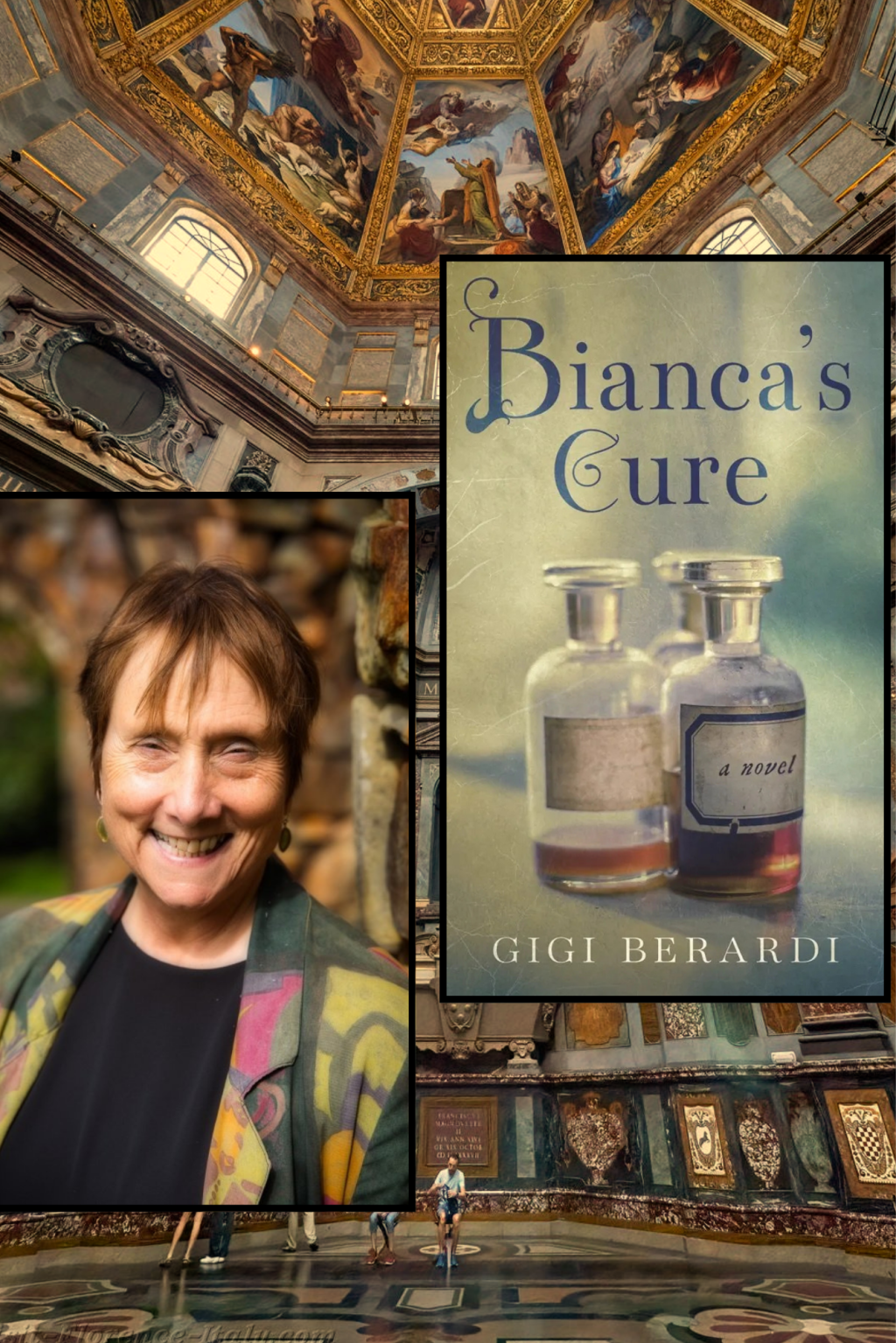
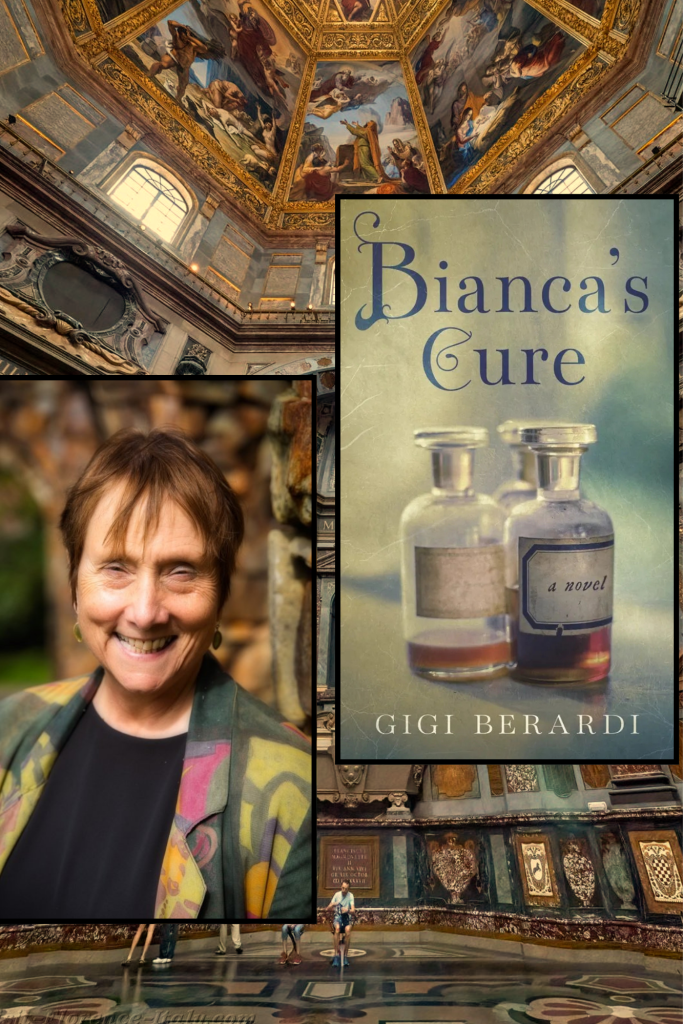
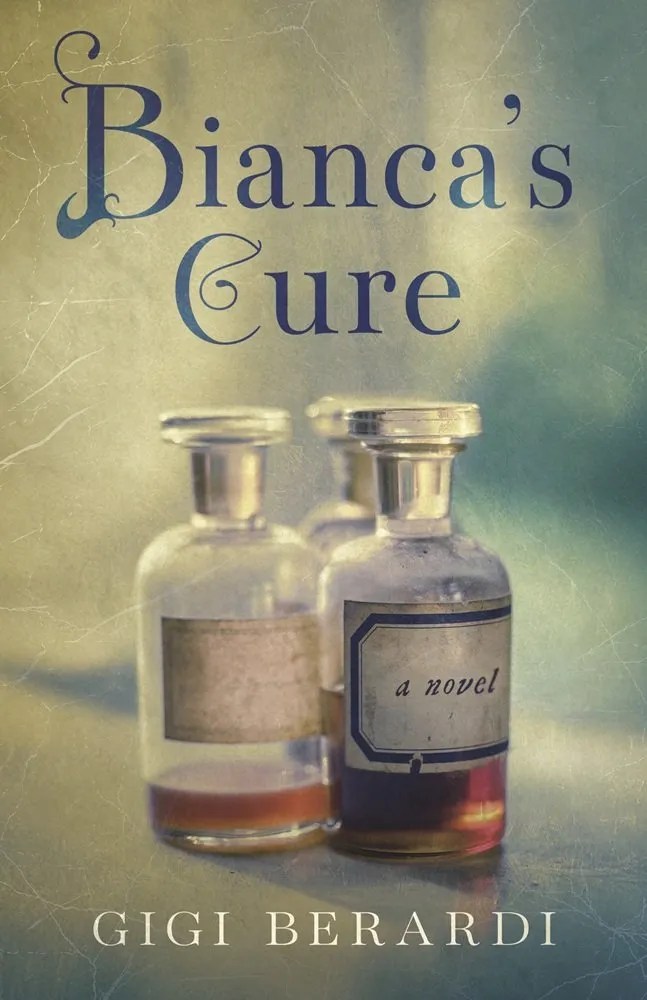
On the newest episode of Thanks, I’ll Take It From Here, host Kami had the chance to talk with author Gigi Berardi about her historical fiction novel, Bianca’s Cure. The book reimagines the life of Bianca Capello as a brilliant and ambitious woman determined to solve one of the greatest medical mysteries of her time.
Set in 16th century Florence, the novel blends real historical figures, court politics, early scientific inquiry, and a bold question. What if Bianca Capello had been remembered not for scandal, but for science?
For centuries, Bianca Capello has mostly been remembered for her controversial relationship with Francesco I de’ Medici, the Grand Duke of Tuscany. Their love story was the subject of gossip and political rumors throughout Renaissance Florence. But when Berardi began researching the historical record, she quickly realized how incomplete the story of Bianca truly was.
“All we knew about Bianca was that she was a babe, basically,” Berardi said during our conversation. “We have written accounts talking about her great beauty. But the story itself felt unfinished.”
That gap in the historical record is exactly where Bianca’s Cure begins.
Instead of telling the familiar story of scandal, Berardi imagines Bianca as a woman of science working within the rigid power structures of Renaissance Italy. In the novel, Bianca becomes obsessed with finding a cure for malaria, one of the most devastating diseases in Europe during that time.
Berardi’s approach was inspired by a simple but powerful question.
“If we only talk about what definitely happened,” she explained, “we would have a two-page story about Bianca Capello. But if we ask what could have happened, suddenly there is space to imagine her intellectual life.”
The idea is not as far-fetched as it might seem. The Medici family was deeply connected to alchemy and early scientific experimentation. Francesco I de’ Medici maintained a private laboratory where he conducted chemical and alchemical experiments. At one point, he even gave Bianca her own study in the Palazzo Vecchio.
For Berardi, that detail was critical.
“It meant she had what Virginia Woolf described as the two things a woman needs to create,” she said. “Resources and a space of her own.”
The novel also draws inspiration from real scientific history. In 2015, Chinese scientist Tu Youyou won the Nobel Prize for discovering artemisinin, a treatment derived from the plant artemisia that remains one of the most effective therapies for malaria today.
That discovery made Berardi rethink the possibilities of Bianca’s story.
“It made me ask not ‘did Bianca do this,’ but ‘could she have?’” Berardi said.
In Bianca’s Cure, Bianca becomes a fiercely determined thinker navigating both intellectual ambition and personal relationships. Her connection with Francesco remains central to the story, but the novel explores how complex their partnership may have been.
“In the book, Bianca says that ‘Bianca the scientist had everything to lose if Bianca the lover failed,’” Berardi explained. “That tension is part of who she is.”
The character is intentionally complicated. Bianca is ambitious, focused, and sometimes difficult. Berardi wanted readers to wrestle with her choices rather than simply admire her.
“Once readers connect to Bianca’s personal goals and professional identity, many of us can relate to having voices that are unheard or not fully listened to,” Berardi said.
Florence itself also plays a major role in the novel. Berardi spent years studying the city and its hidden history, from secret Medici rooms to the scientific culture that existed beneath the surface of Renaissance politics.
“If you look beyond the obvious tourist Florence, there is another city there,” she said. “A Florence that still feels very much like it did five hundred years ago.”
The novel also revisits one of the most enduring mysteries surrounding Bianca Capello. In 1587, Bianca and Francesco died within days of each other at a Medici villa outside Florence. Some historians believe they died of malaria. Others suspect poisoning.
Francesco’s body has been exhumed multiple times in attempts to determine the cause of death.
Bianca’s body, however, was never definitively located.
“The question of what happened to Bianca is still open,” Berardi said. “And I am not letting that go.”
That uncertainty became one of the novel’s emotional anchors. Bianca’s story feels unfinished in history, and Berardi uses fiction to imagine the life that may have existed beyond the surviving records.
If Bianca herself could correct the historical record, Berardi believes the answer would be simple.
“She would want people to know she had a brain,” Berardi said. “That she was not just a beautiful woman. That she could think and talk and was worth listening to.”
That idea appears directly in the novel when Bianca corrects a group of scholars who refer to a female poet only as someone’s wife.
“She reminds them that the poet has a name,” Berardi explained.
It is a small moment, but it captures the larger purpose behind Bianca’s Cure. The novel is part of a growing literary movement that reexamines historical women who were reduced to scandal, myth, or silence.
By reimagining Bianca Capello as a scientist and strategist, Berardi invites readers to reconsider how many other women in history may have been overlooked.
For many readers, that rediscovery feels surprisingly personal.
Bianca is ambitious. She is relentless. And she refuses to stay in the lane society assigns her.
Her story may take place in Renaissance Florence, but the themes feel very modern.
Bianca’s Cure is available now through independent bookstores and online retailers.
To hear the full conversation with Gigi Berardi about the research, the history behind Bianca Capello, and the inspiration behind the novel, check out the full interview on the Thanks, I’ll Take It From Here podcast anywhere you get your podcasts.

 takeitfromheremedia.com
Leave a comment